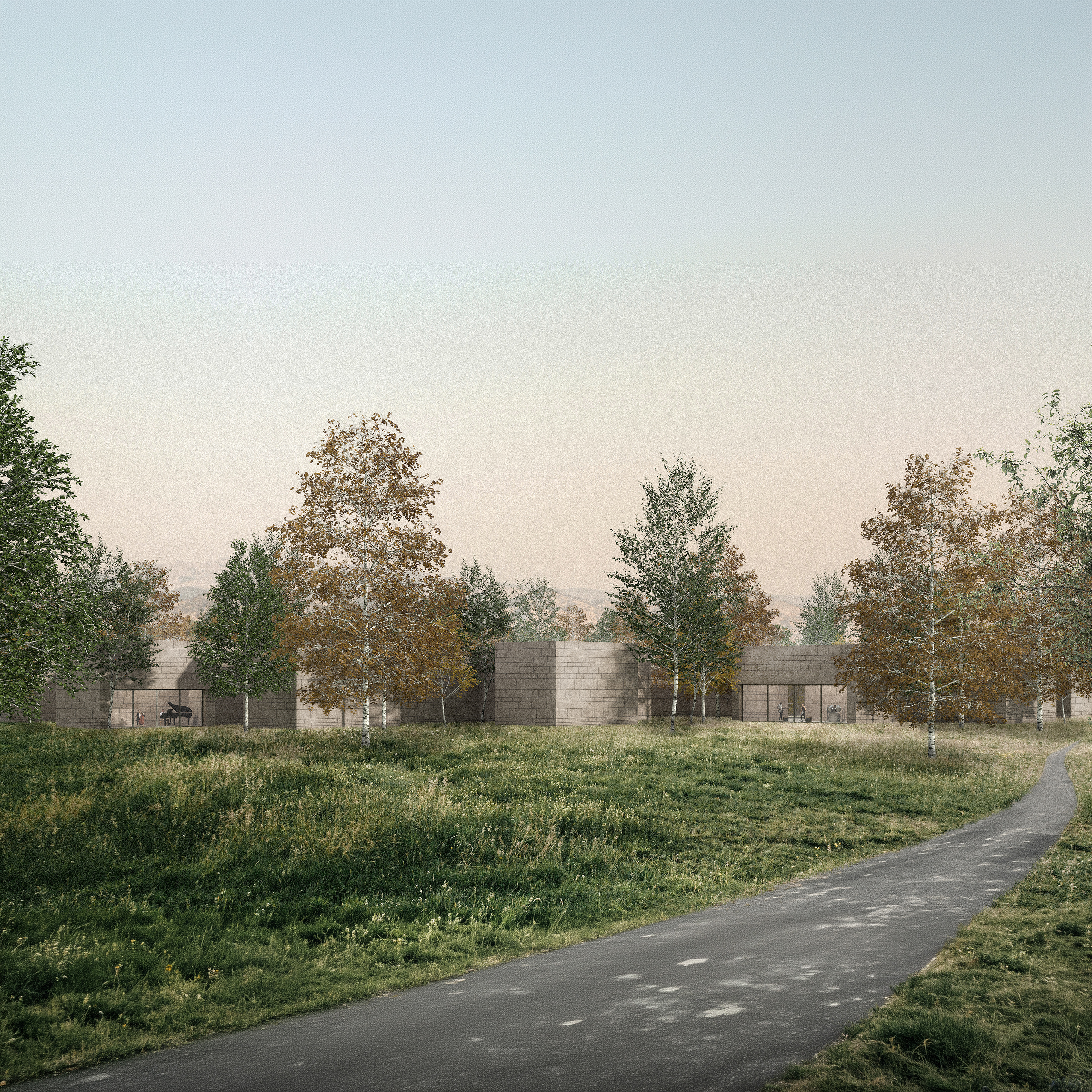
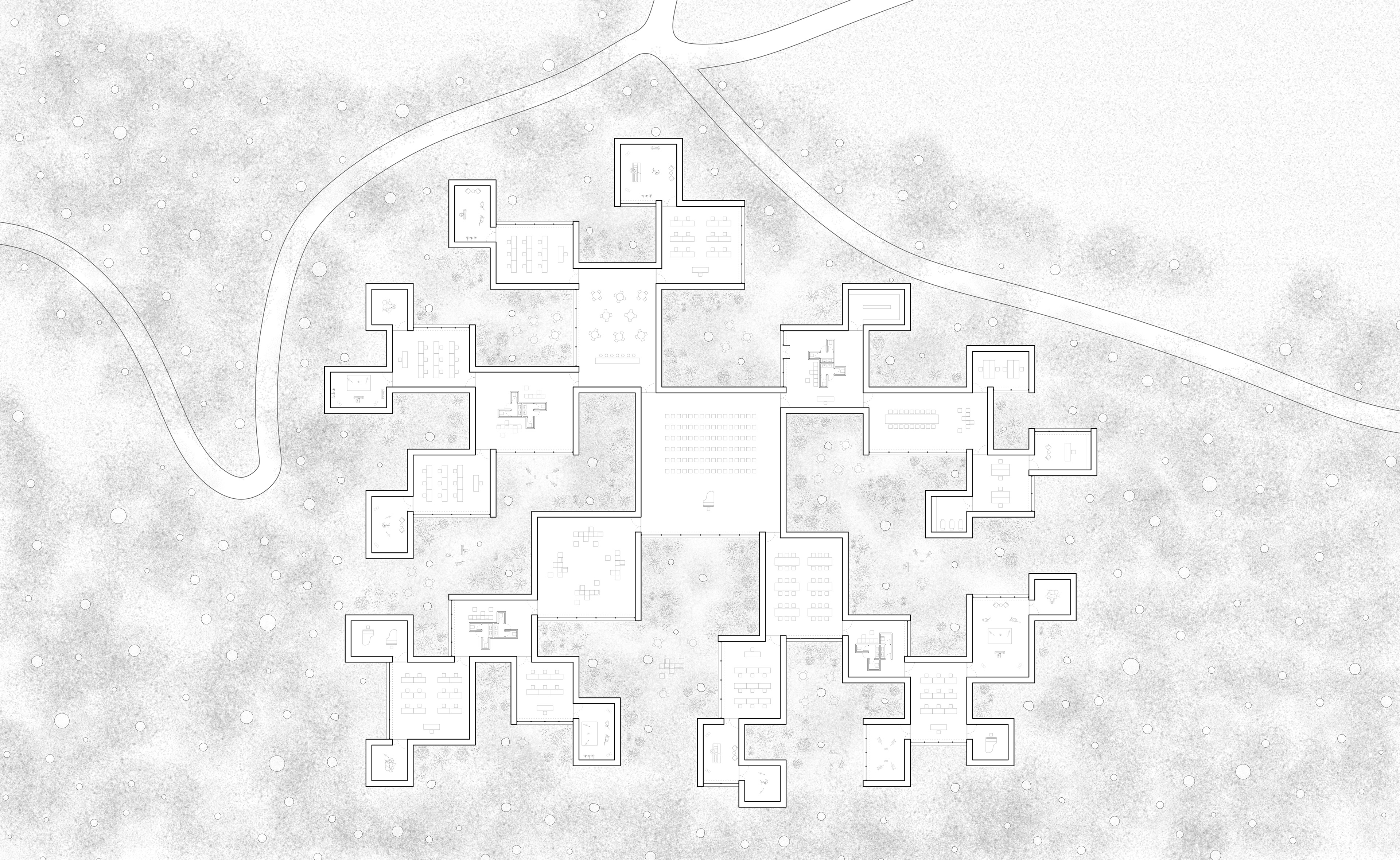
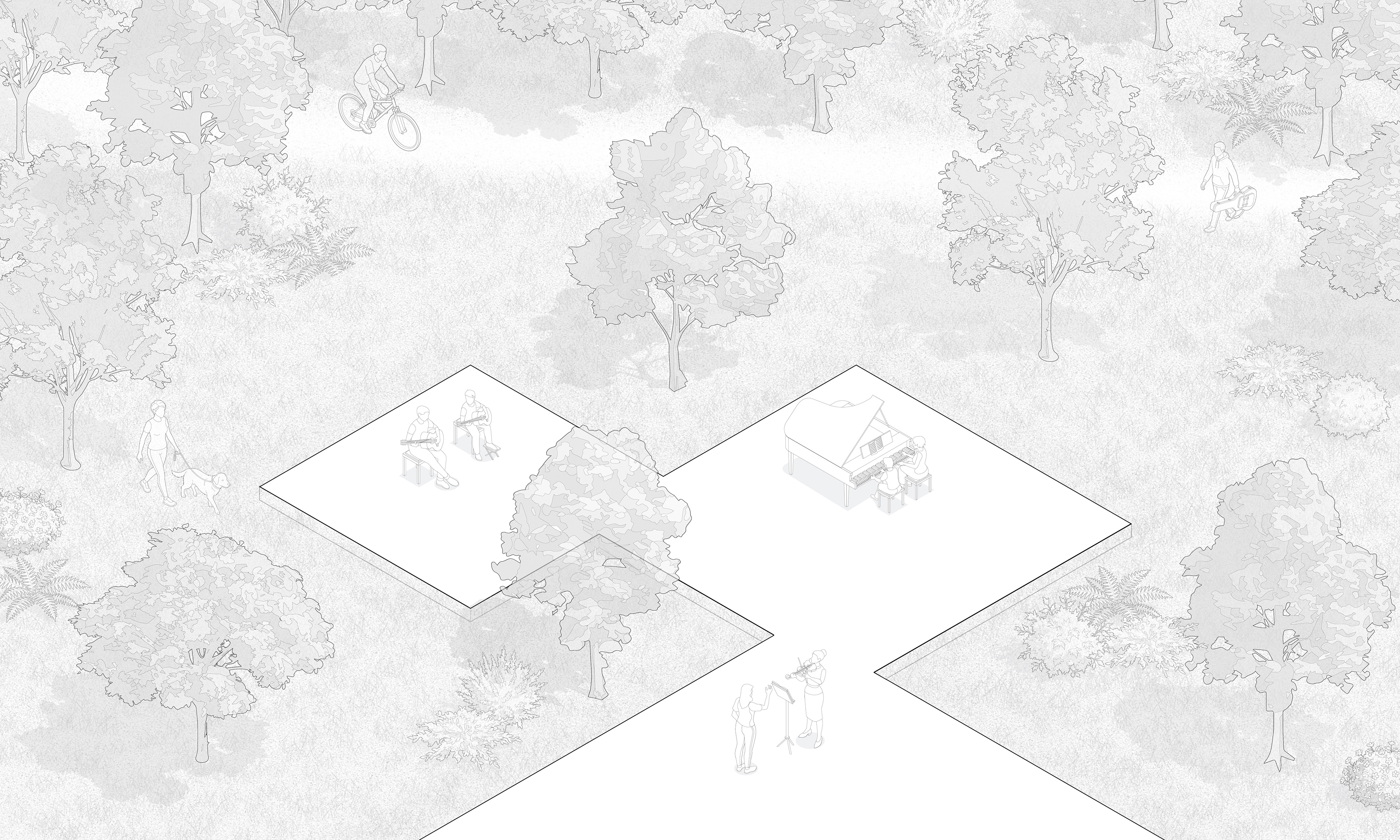
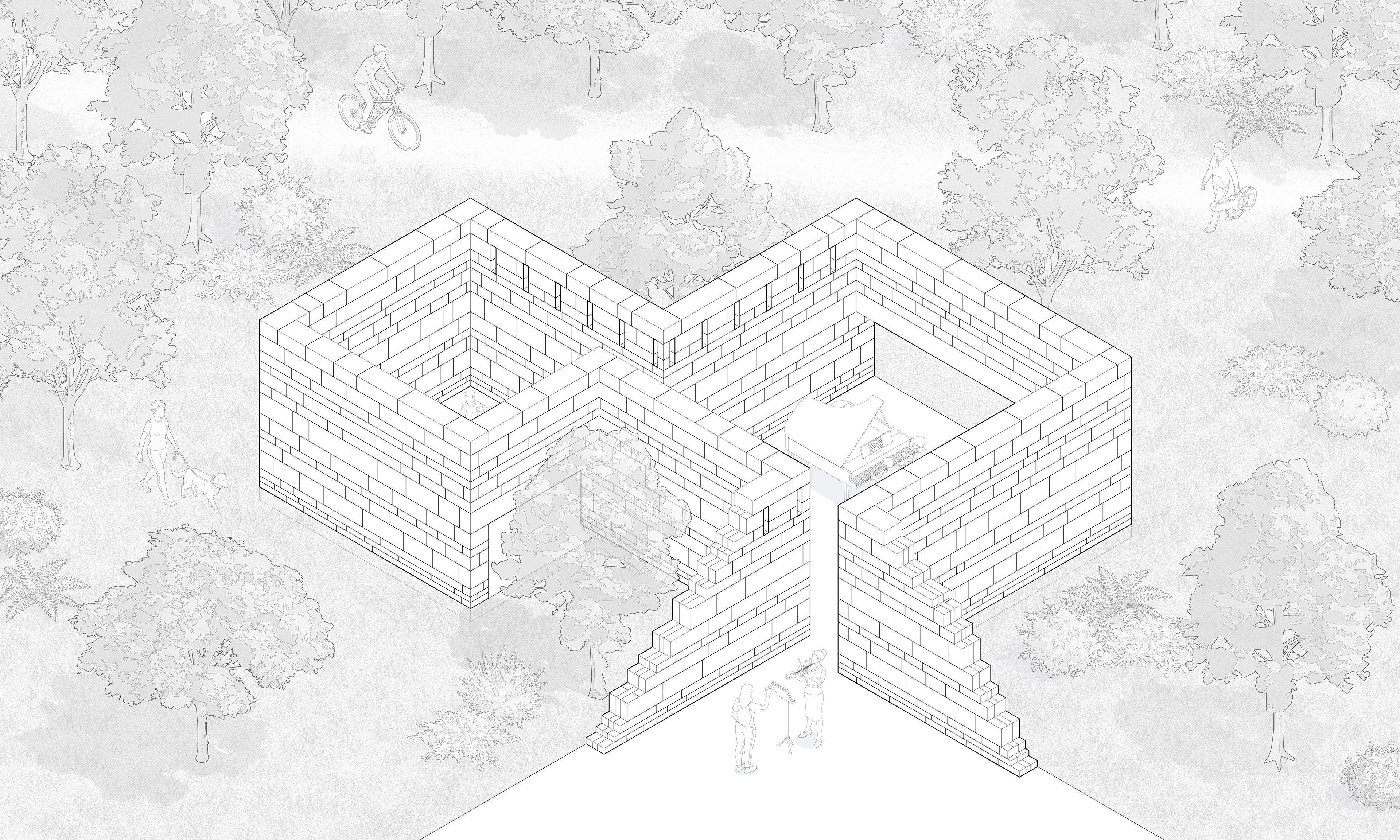
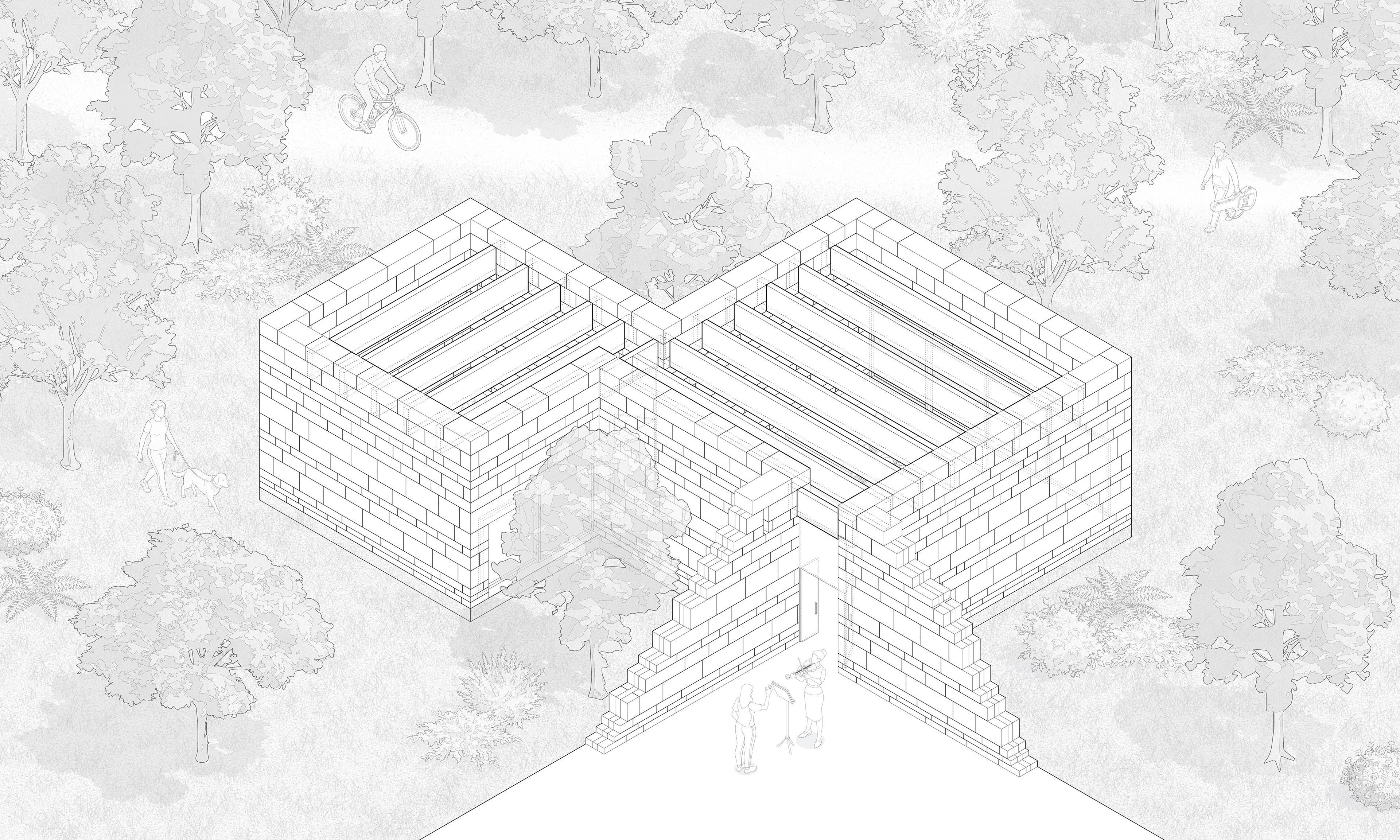
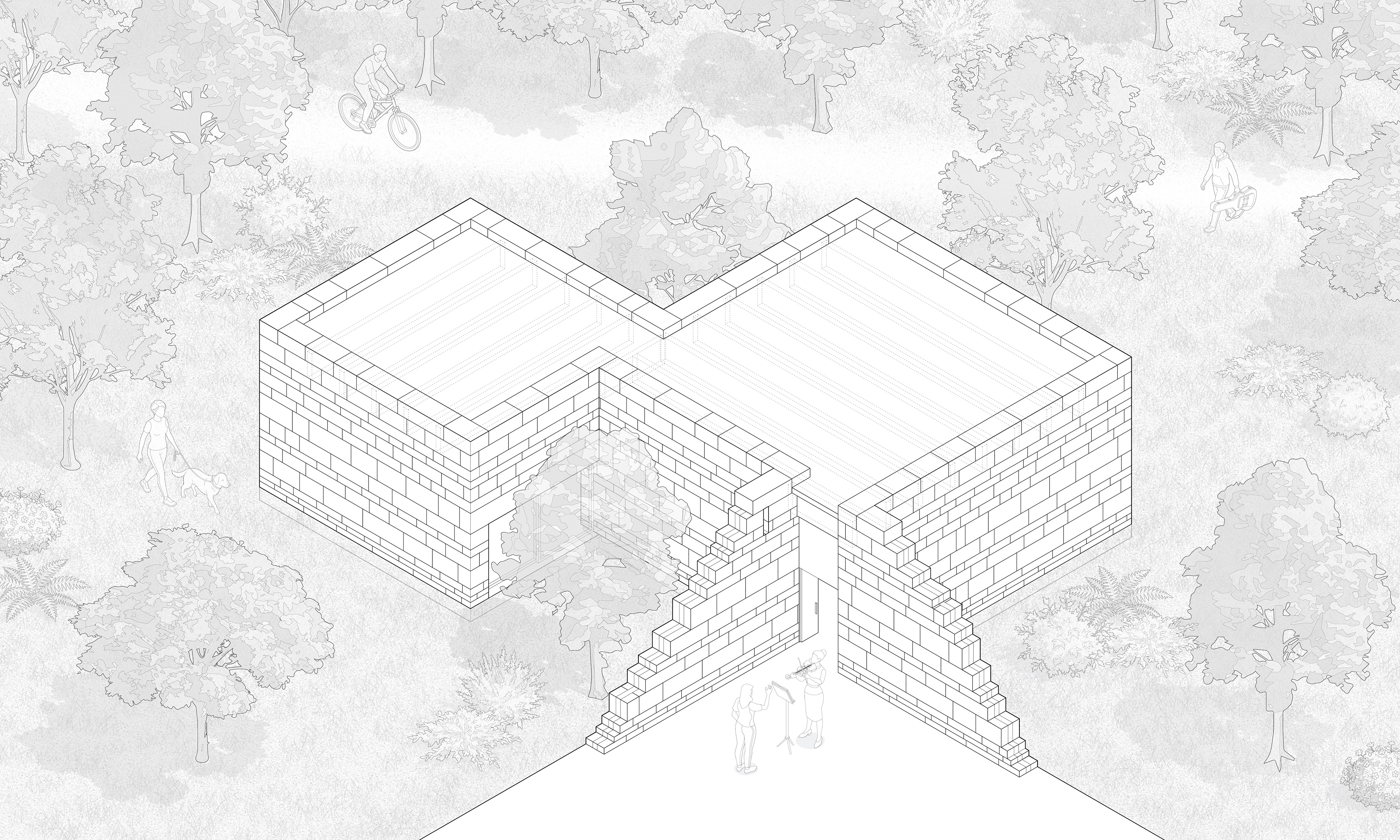
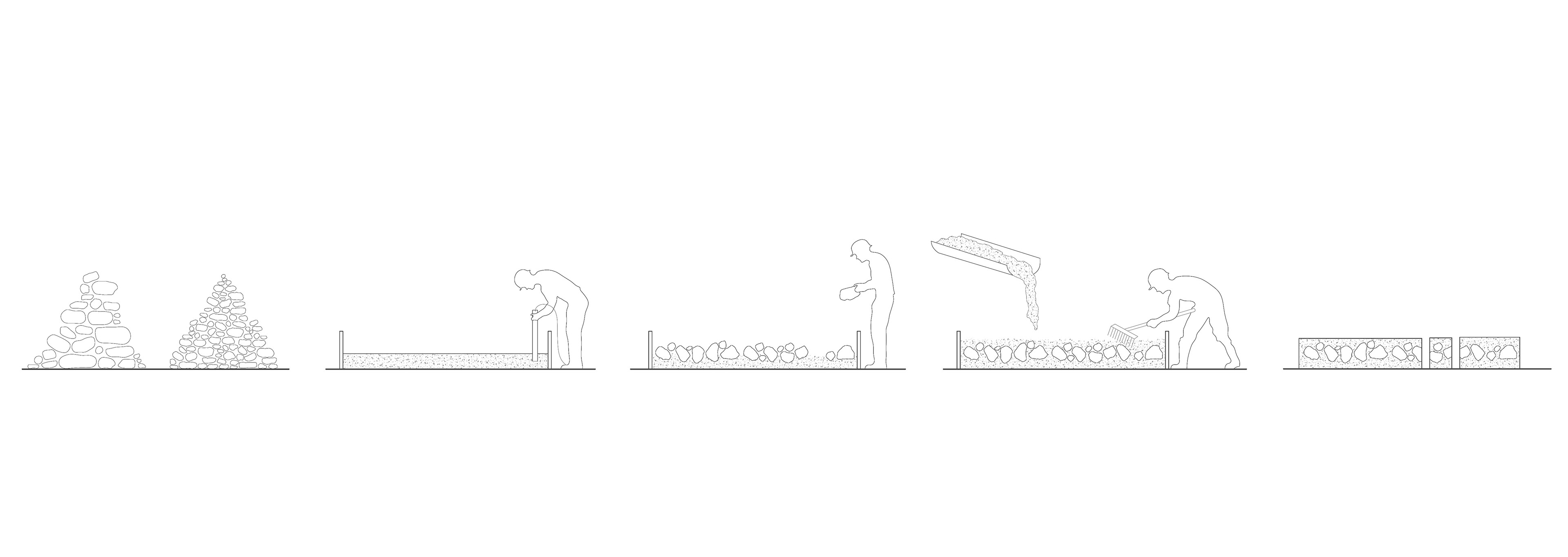
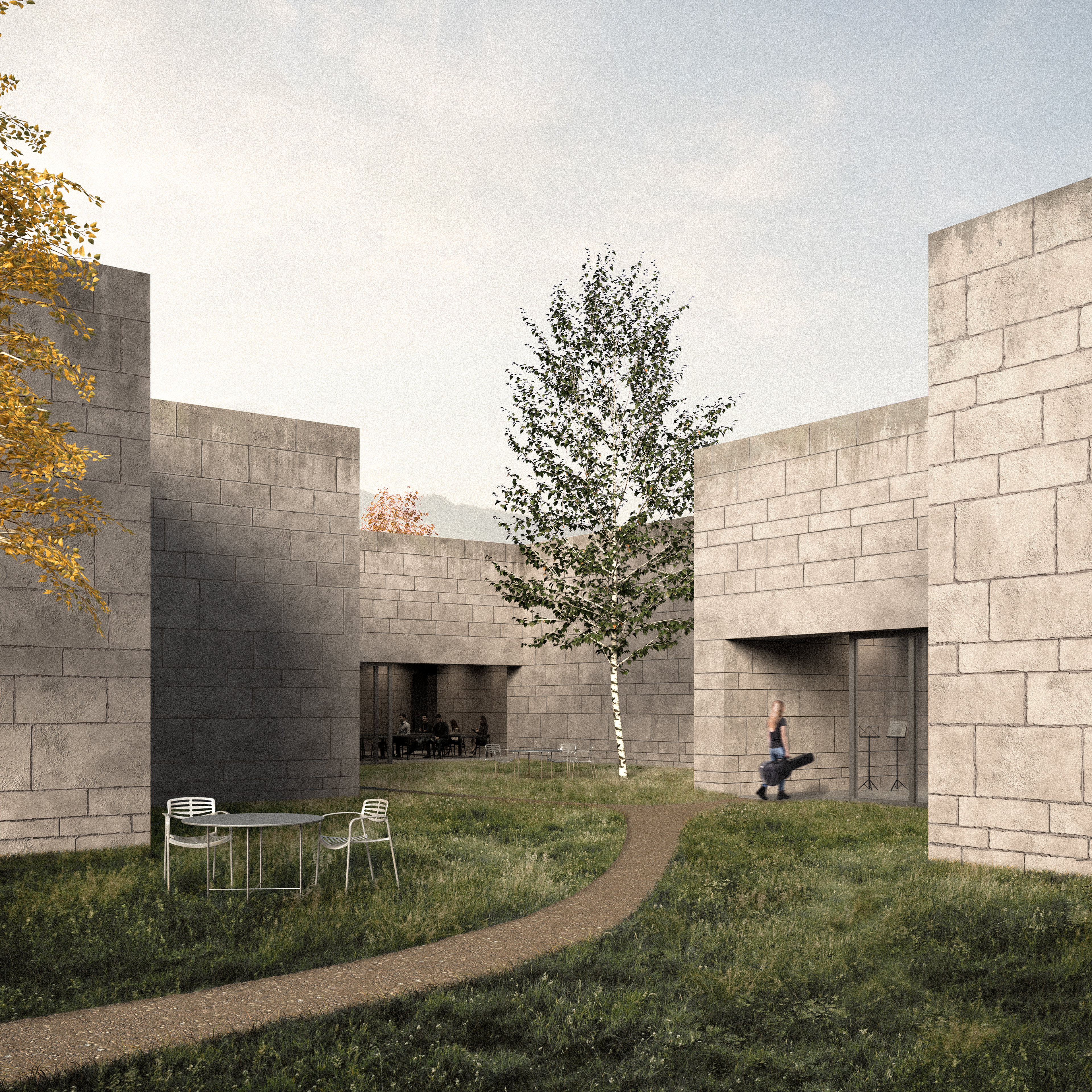
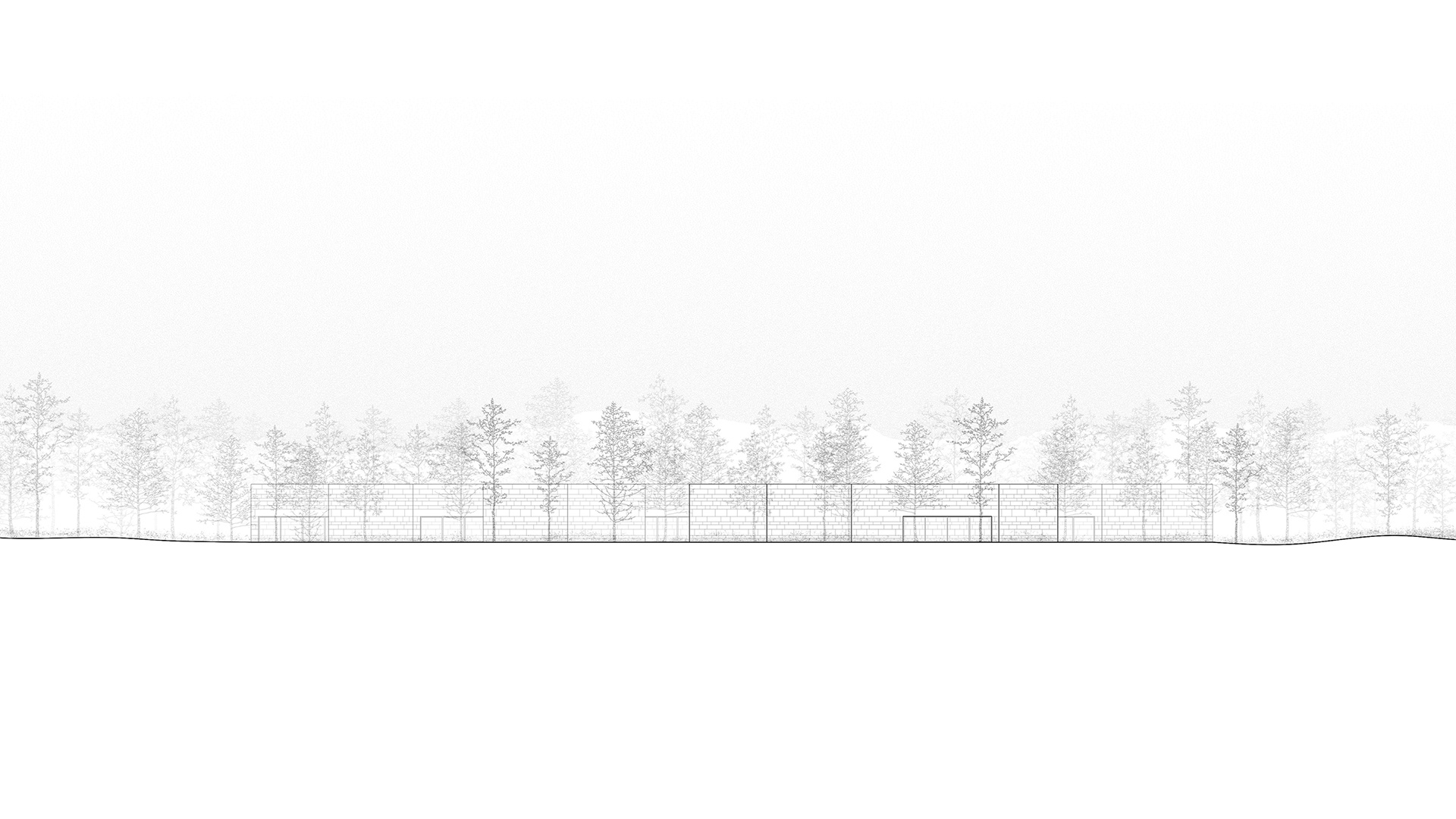
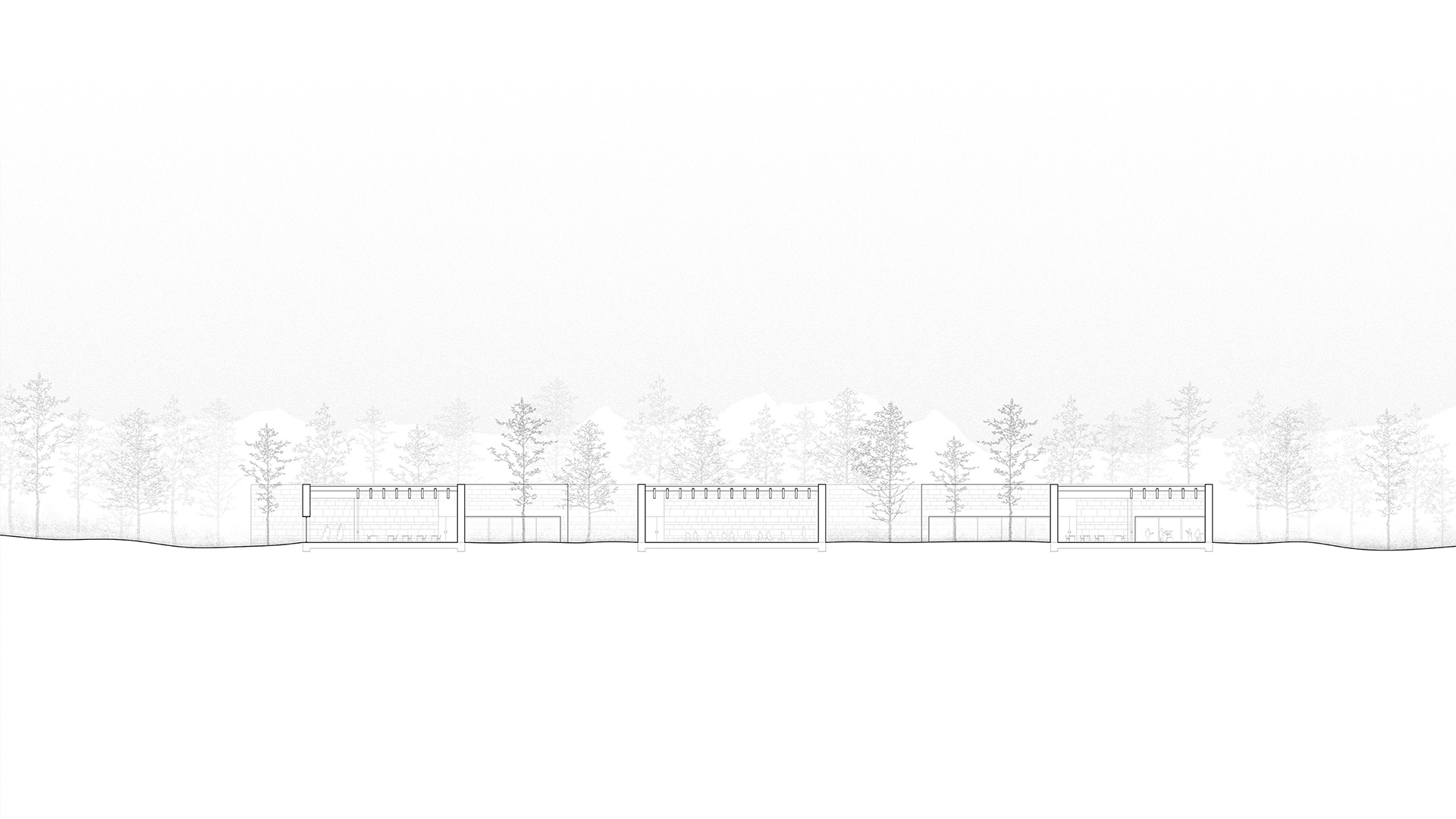
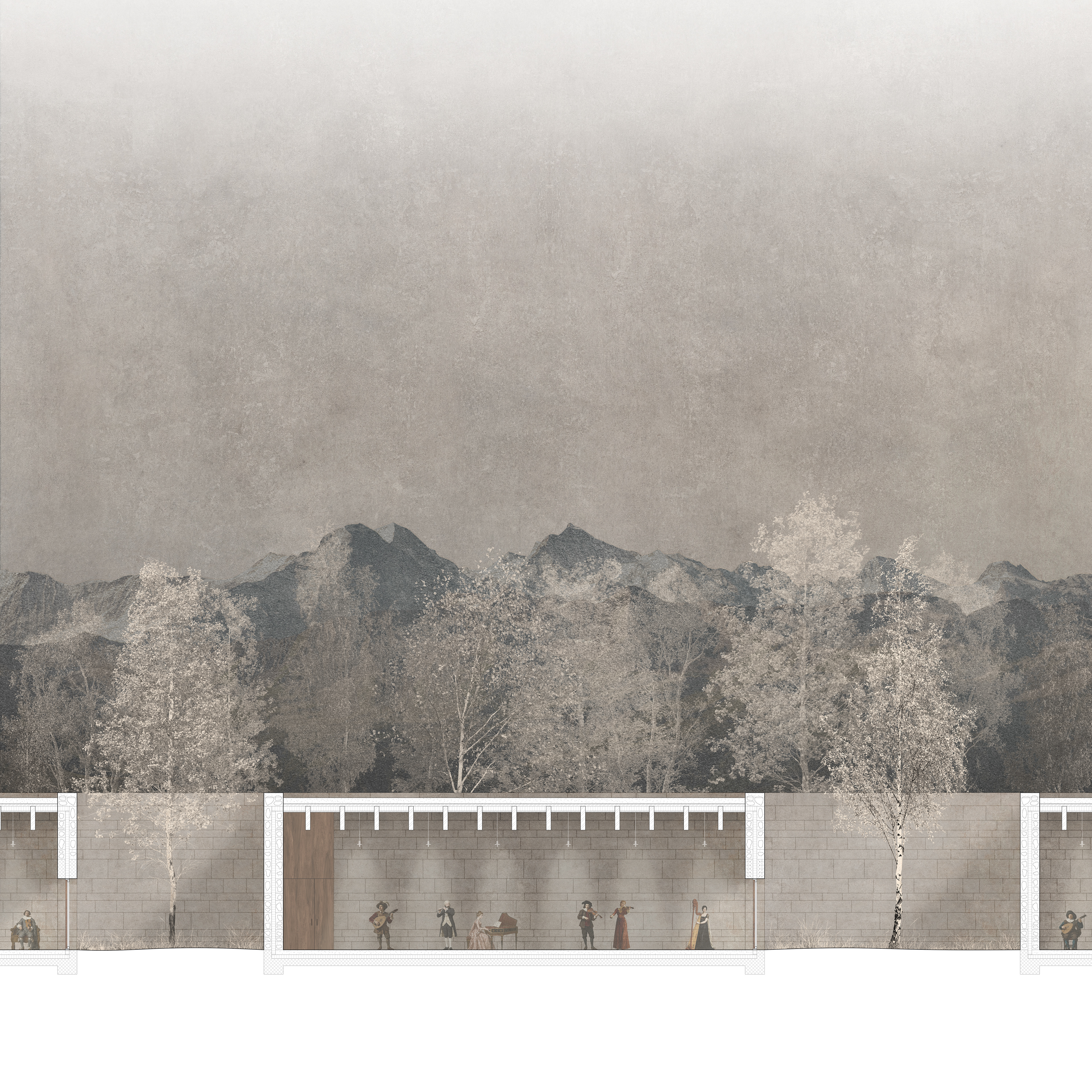
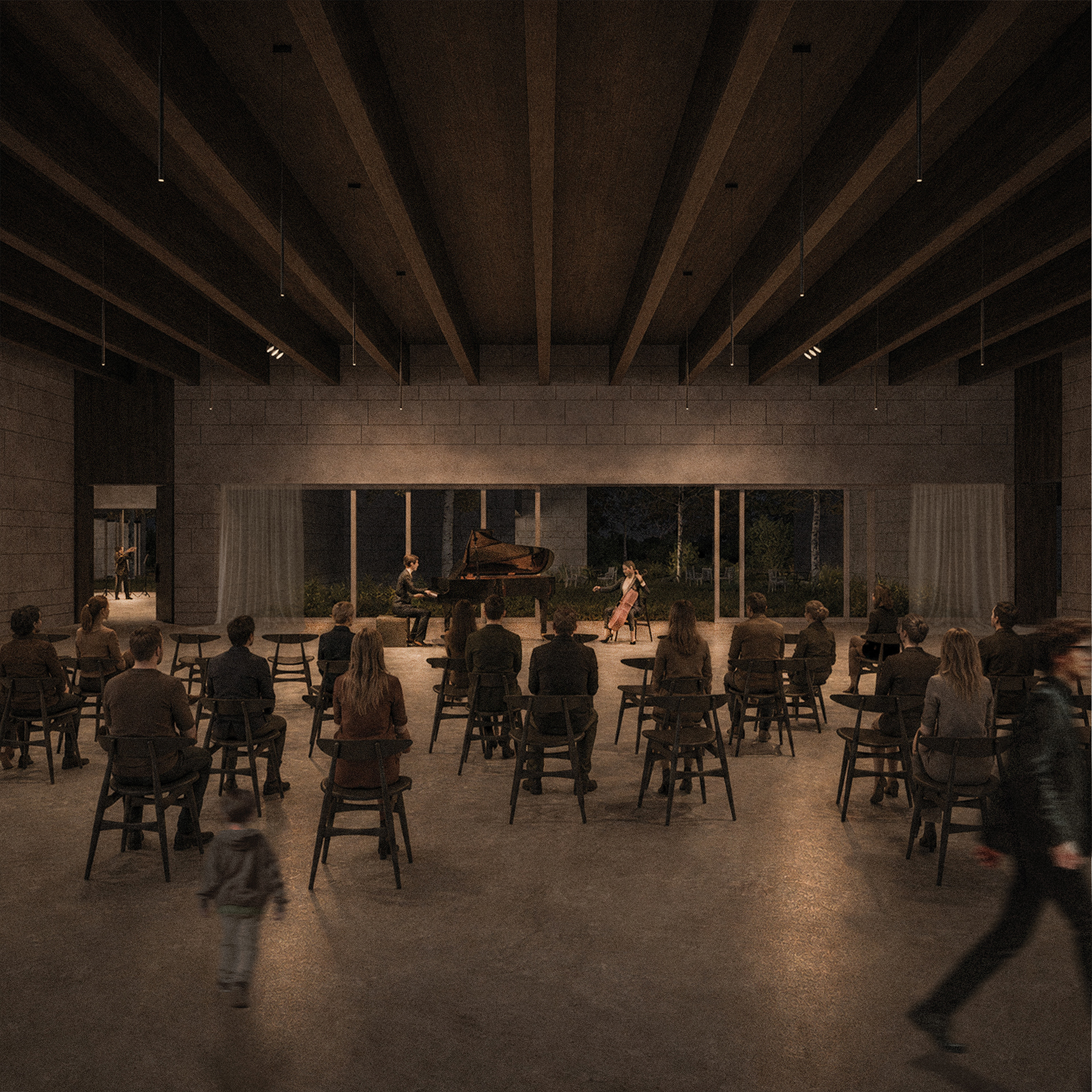

The project proposes a music school in the Isone Valley, positioned between Medeglia and Isone and accessible from both villages. Rather than occupying the site as an autonomous object, it establishes a precise relationship with an existing landscape: a former pasture that was later replanted with tall birch trees. The intervention is placed within this man-made grove, threading itself between the trunks without removing or altering them. In this way, the project does not overwrite the site but inhabits it, using the existing arrangement of trees as a condition that guides its form and spatial development. The building is generated by a single continuous wall that defines and encloses the entire school. Instead of composing the project through separate volumes, the wall acts as the primary architectural device, organizing the sequence of spaces and their degree of openness, intimacy, and acoustic isolation. Around the central rehearsal hall, conceived as the collective heart of the school, the wall thickens, bends, and extends to produce smaller rooms for practice, study, administration, and shared use. The project is therefore understood less as a group of buildings and more as one continuous constructed line that moves through the clearing, delimiting space while remaining deeply tied to the logic of the site. The construction system reinforces this relation to the territory. The wall is imagined as an assembly of concrete blocks of varying sizes, each containing stones derived from two local conditions: landslides, especially in the Isone area, and quarry waste from Ticino. These materials are not treated as residual matter but as a resource capable of giving architectural form to processes of instability, extraction, and discard already present in the region. The project thus attempts to transform two problematic by-products of the territory into a constructive system, turning local debris into mass, enclosure, and spatial order. Above this heavy mineral wall, the roof is formed by large timber beams, whose structural and acoustic qualities help shape the interior atmosphere of the music school. The result is an architecture rooted in the landscape both physically and materially, linking music, construction, and territory into a single spatial idea.