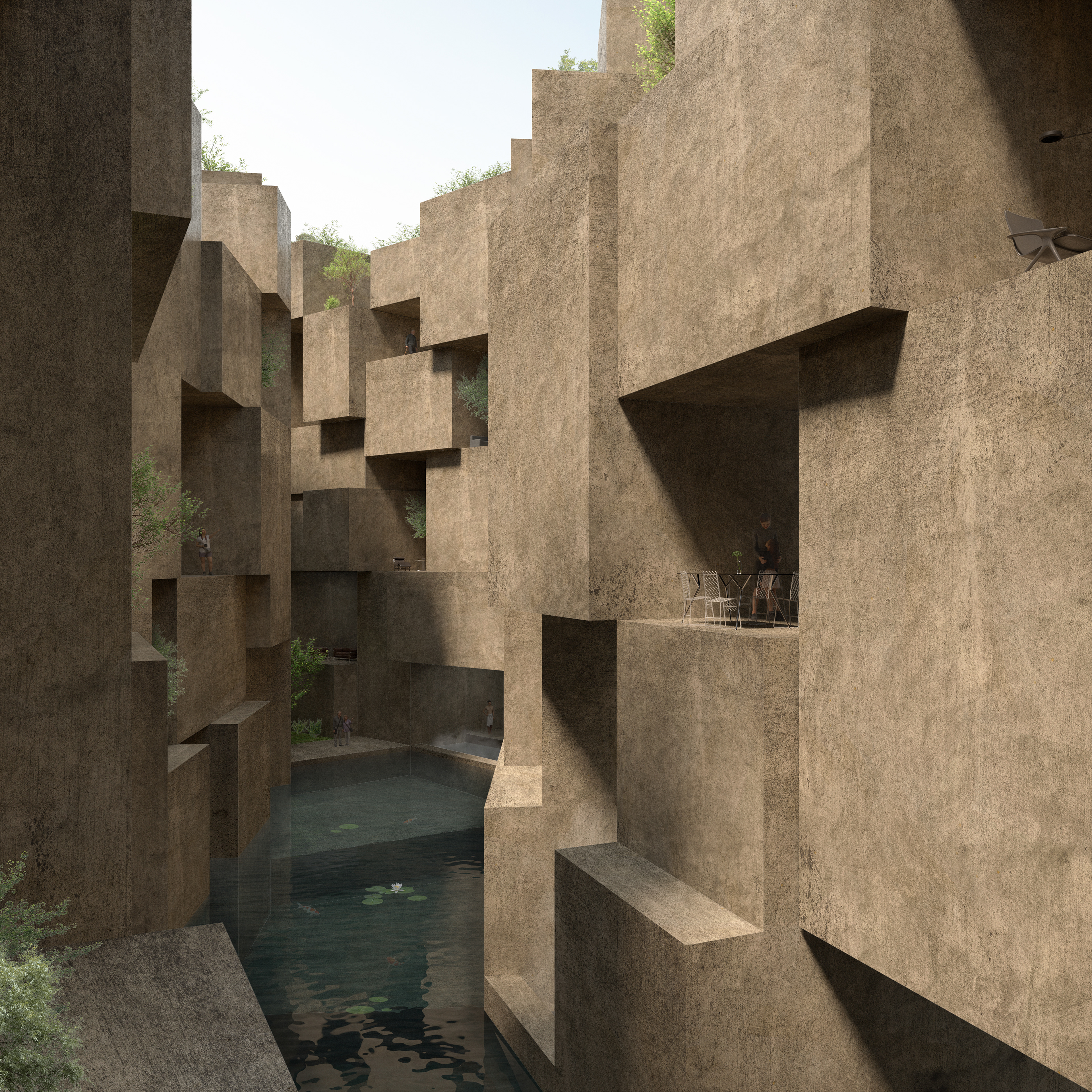
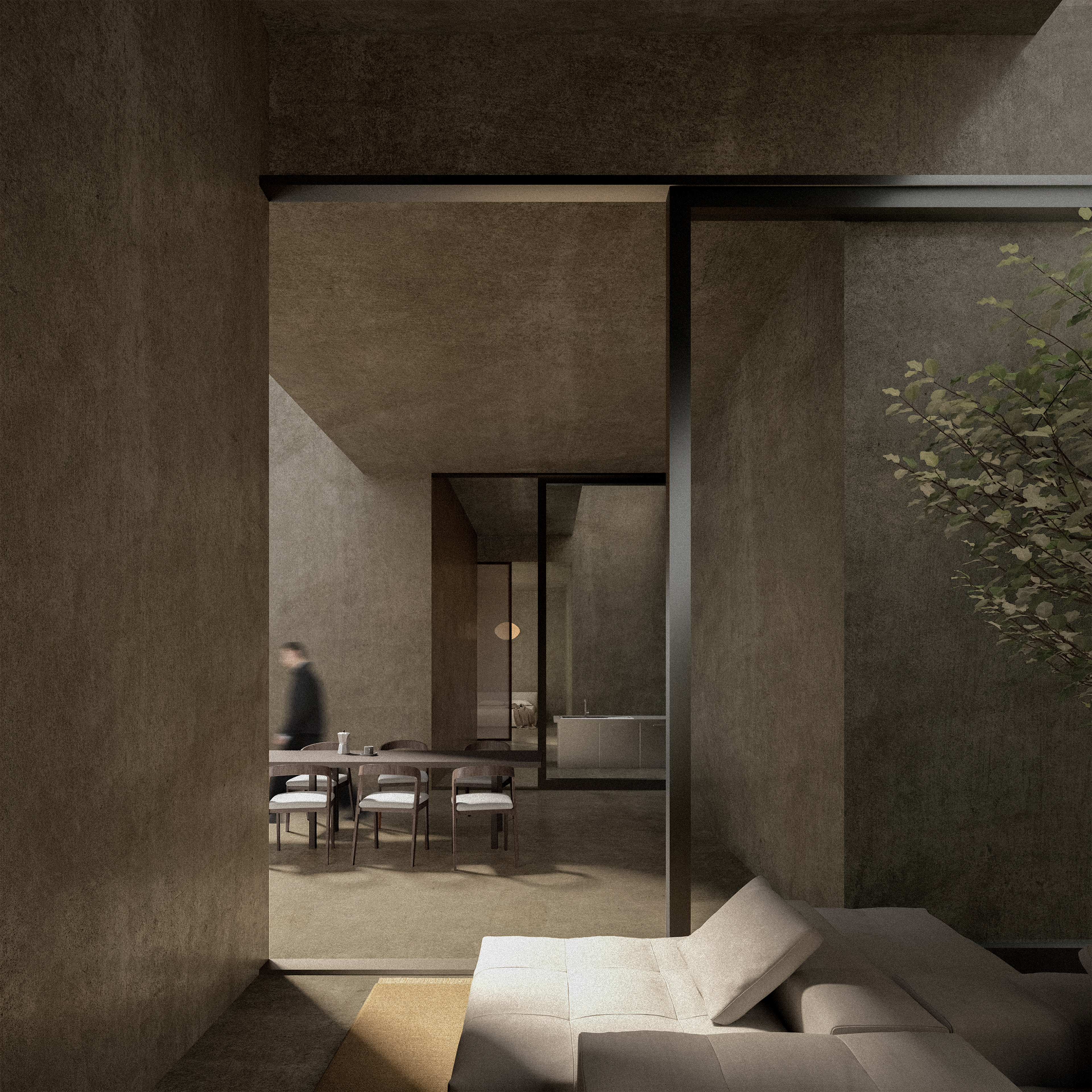
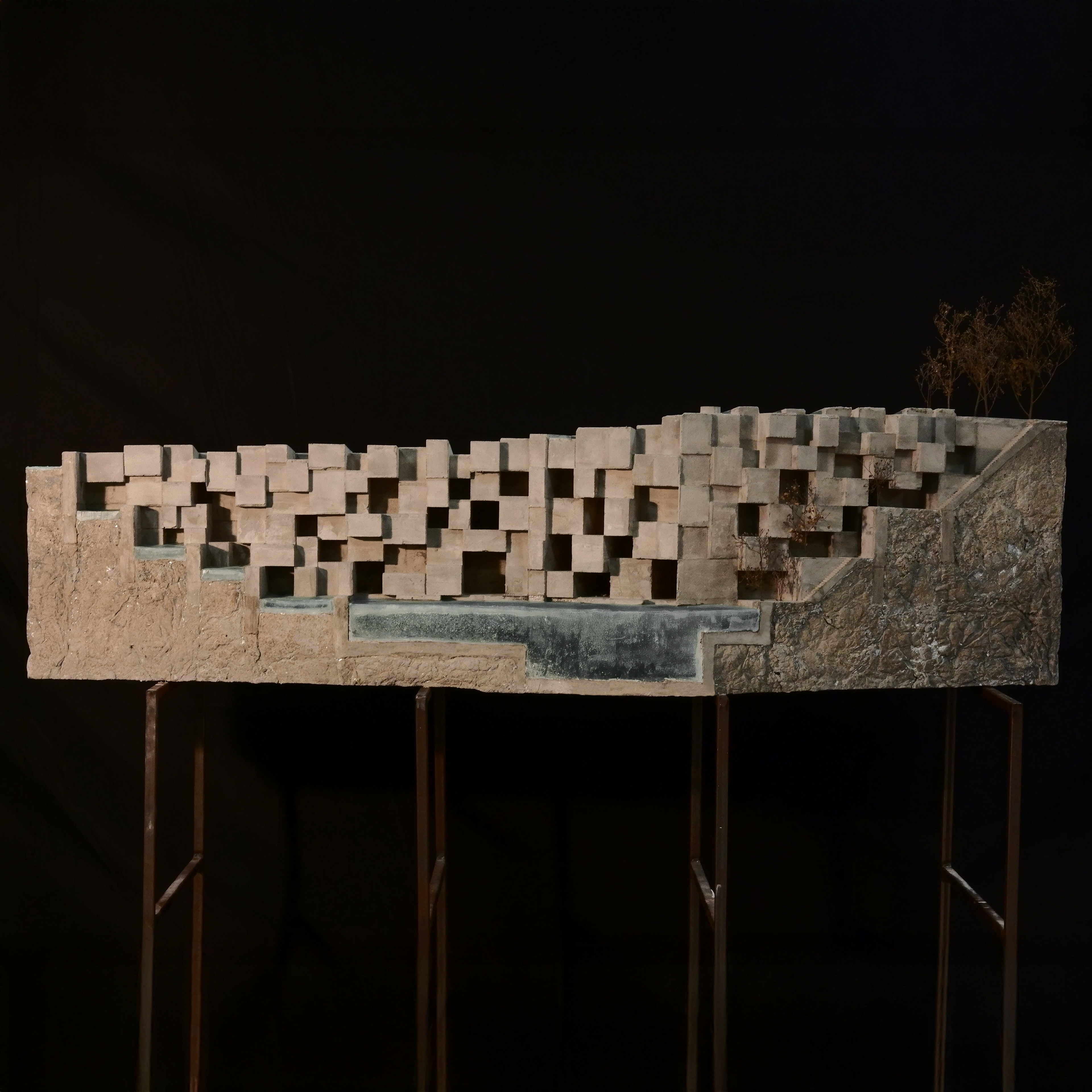
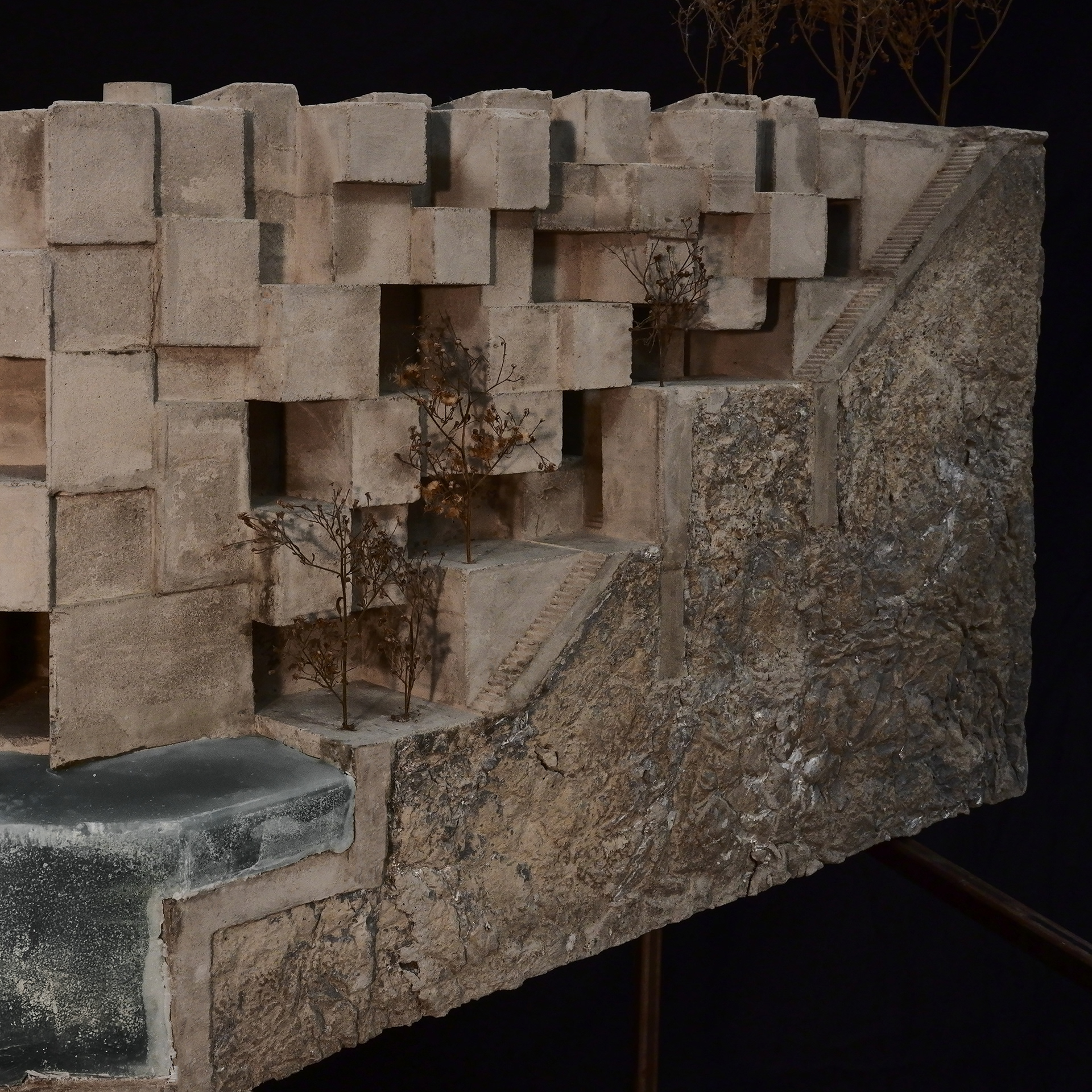
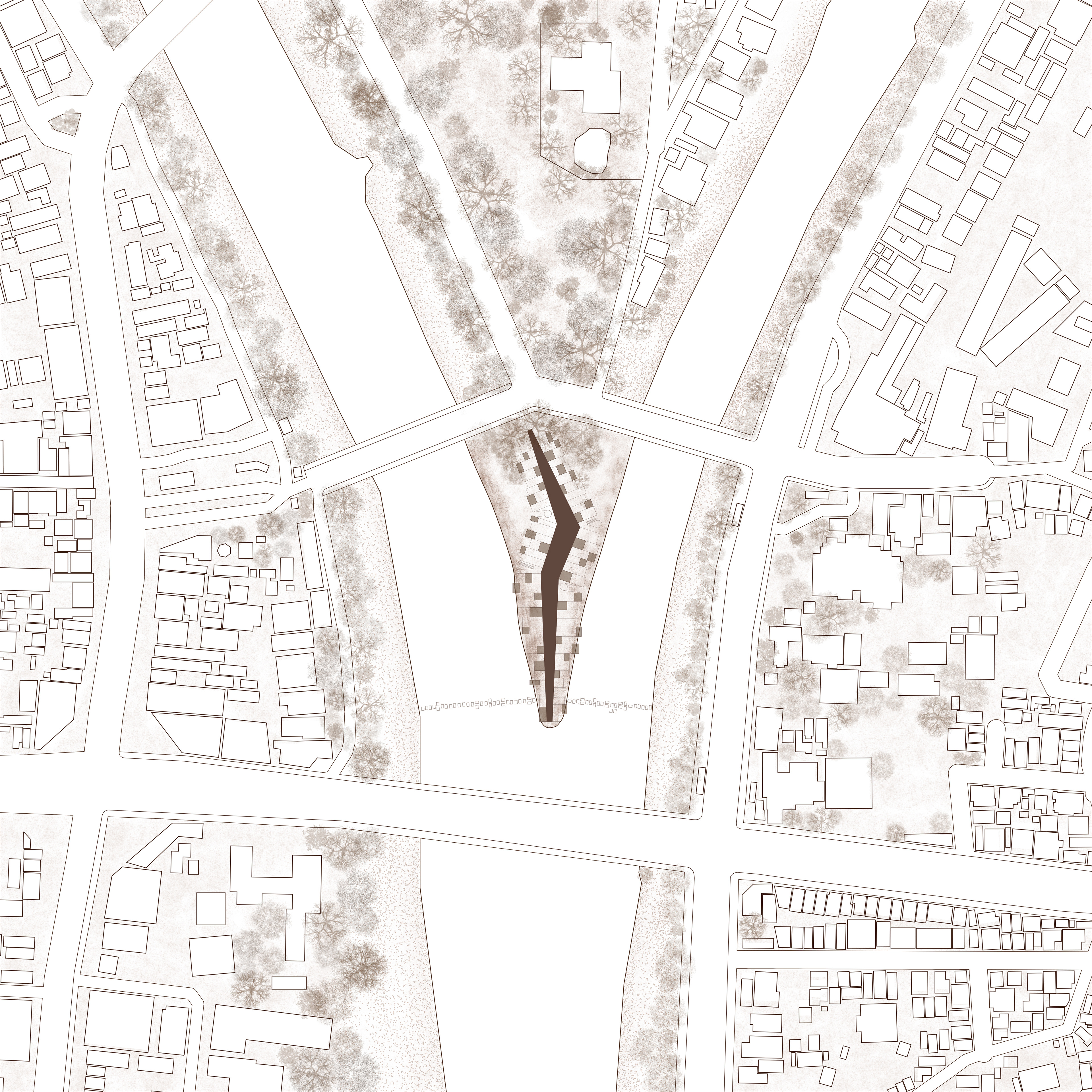
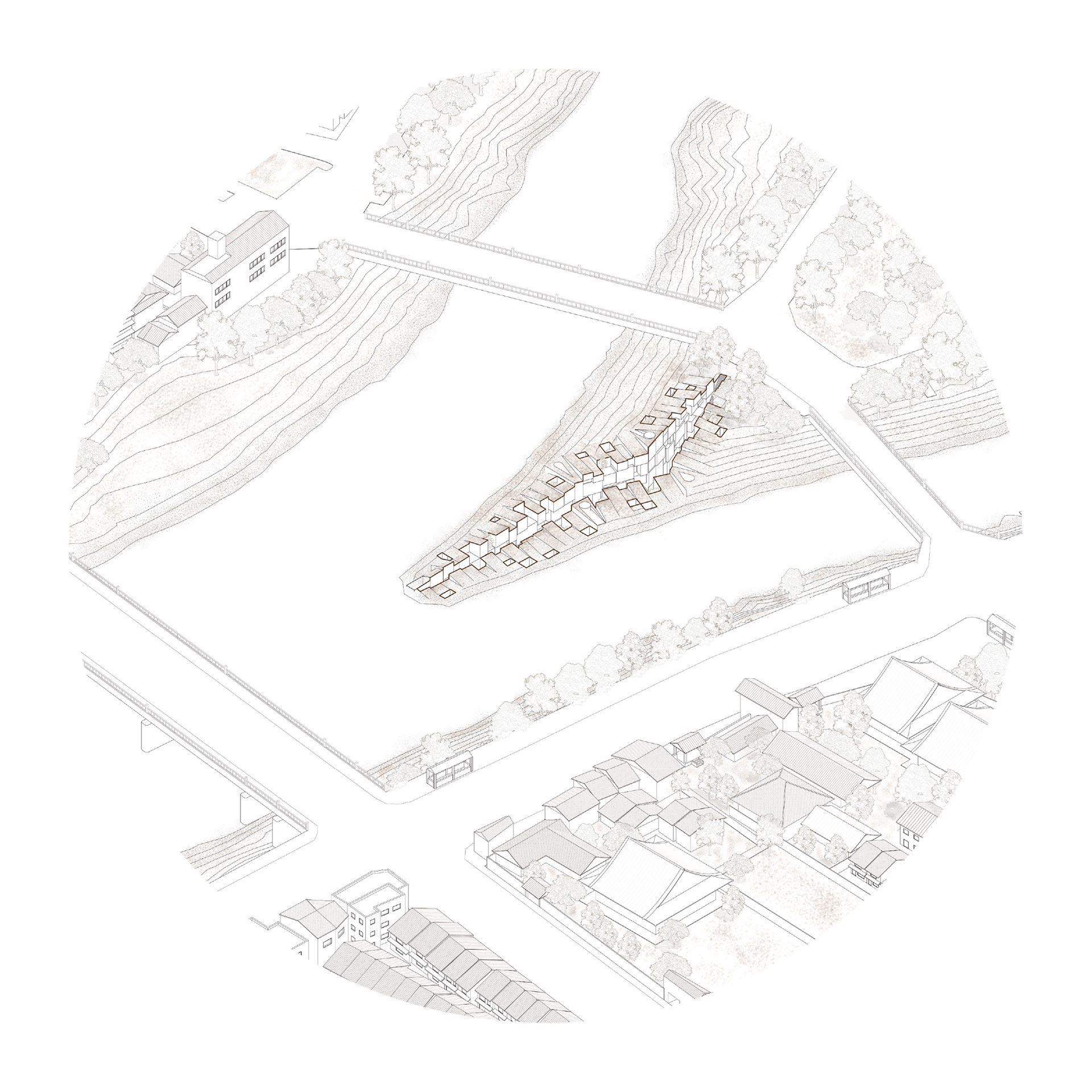
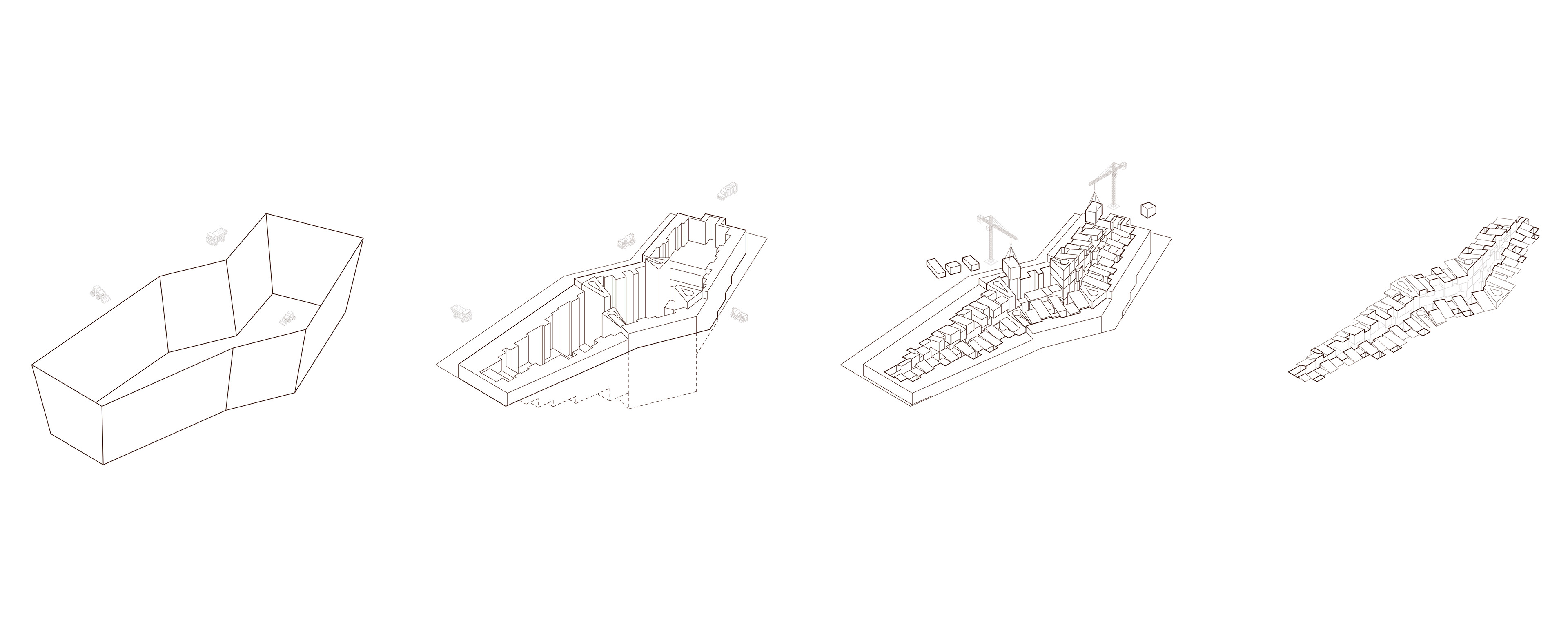
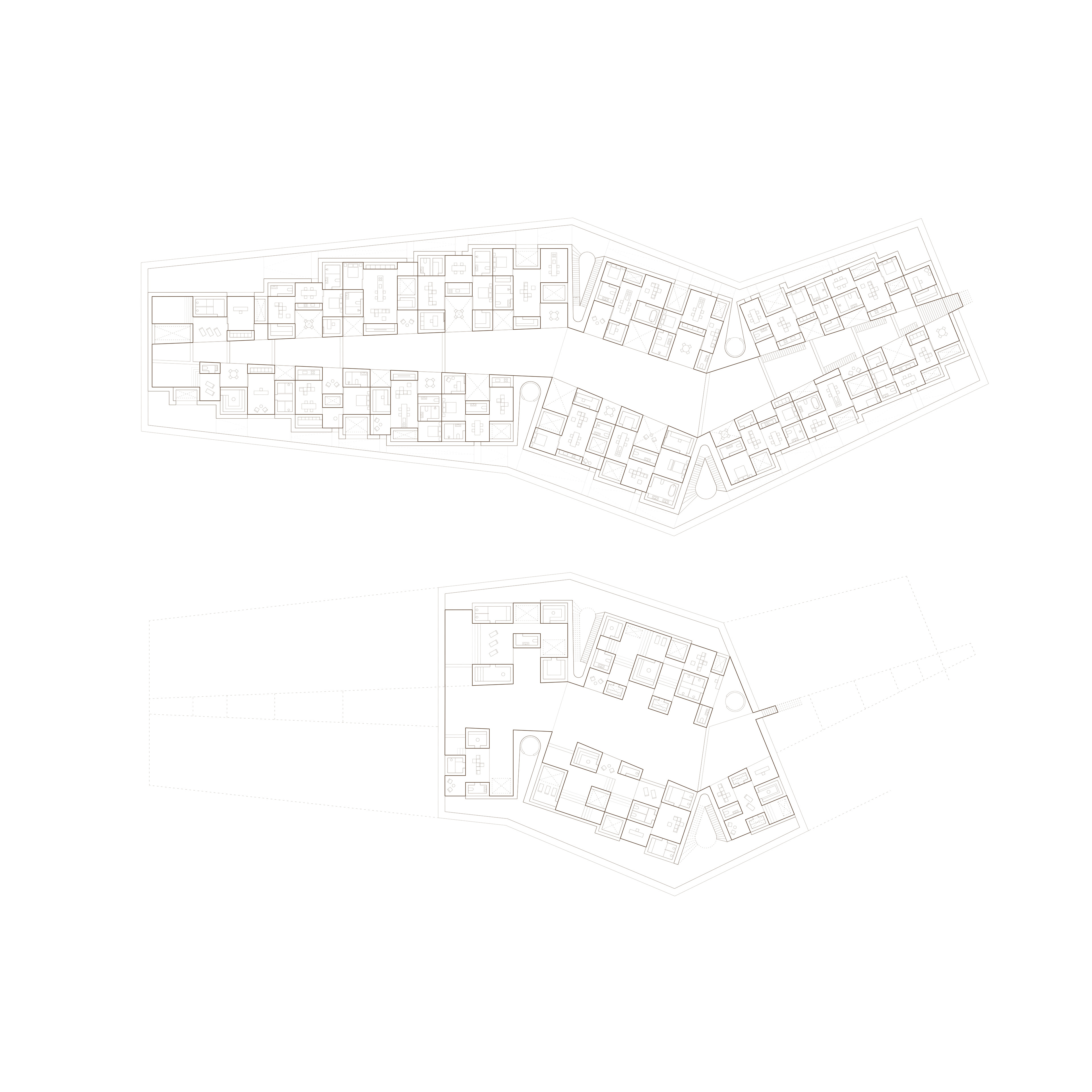
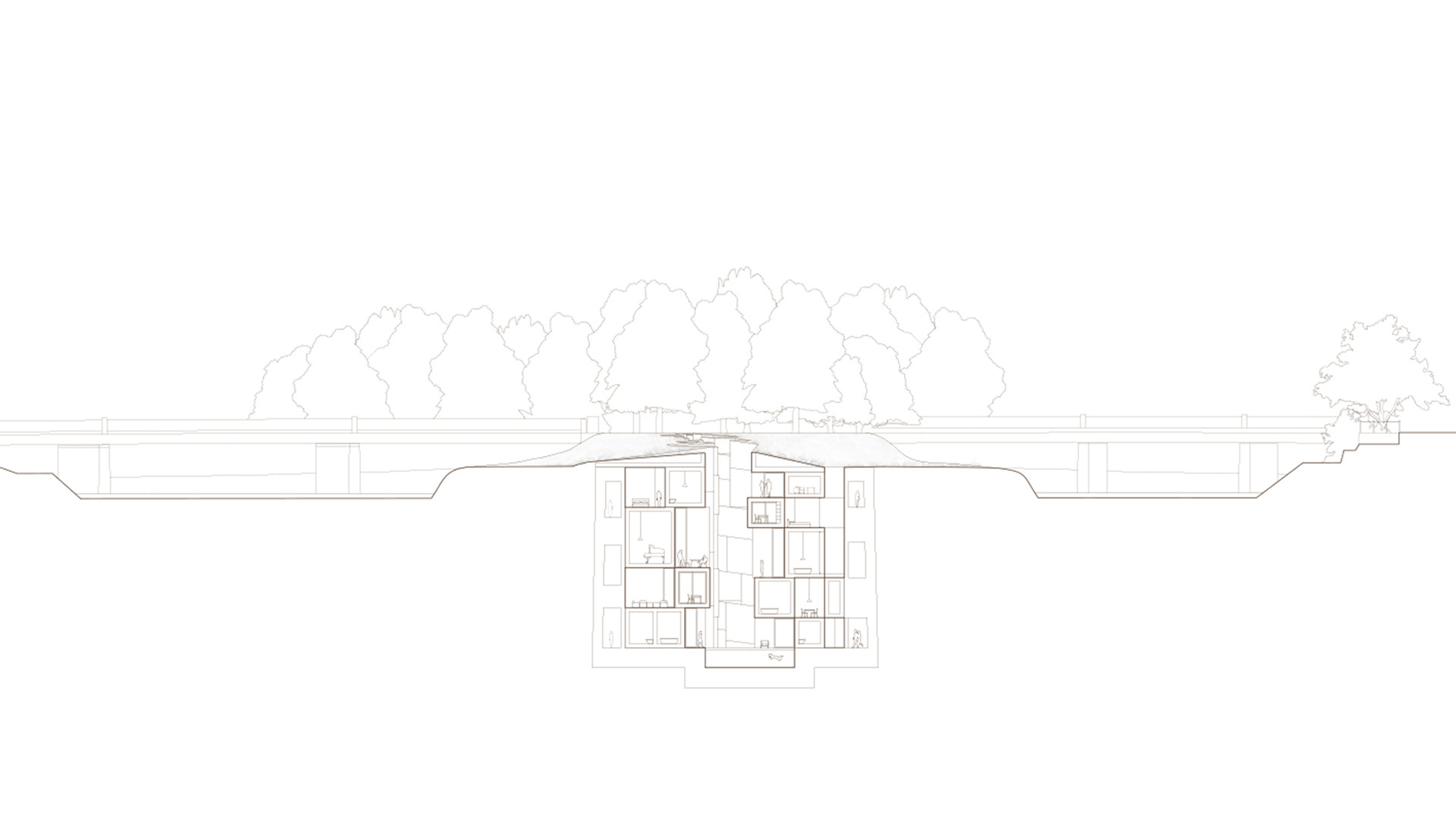
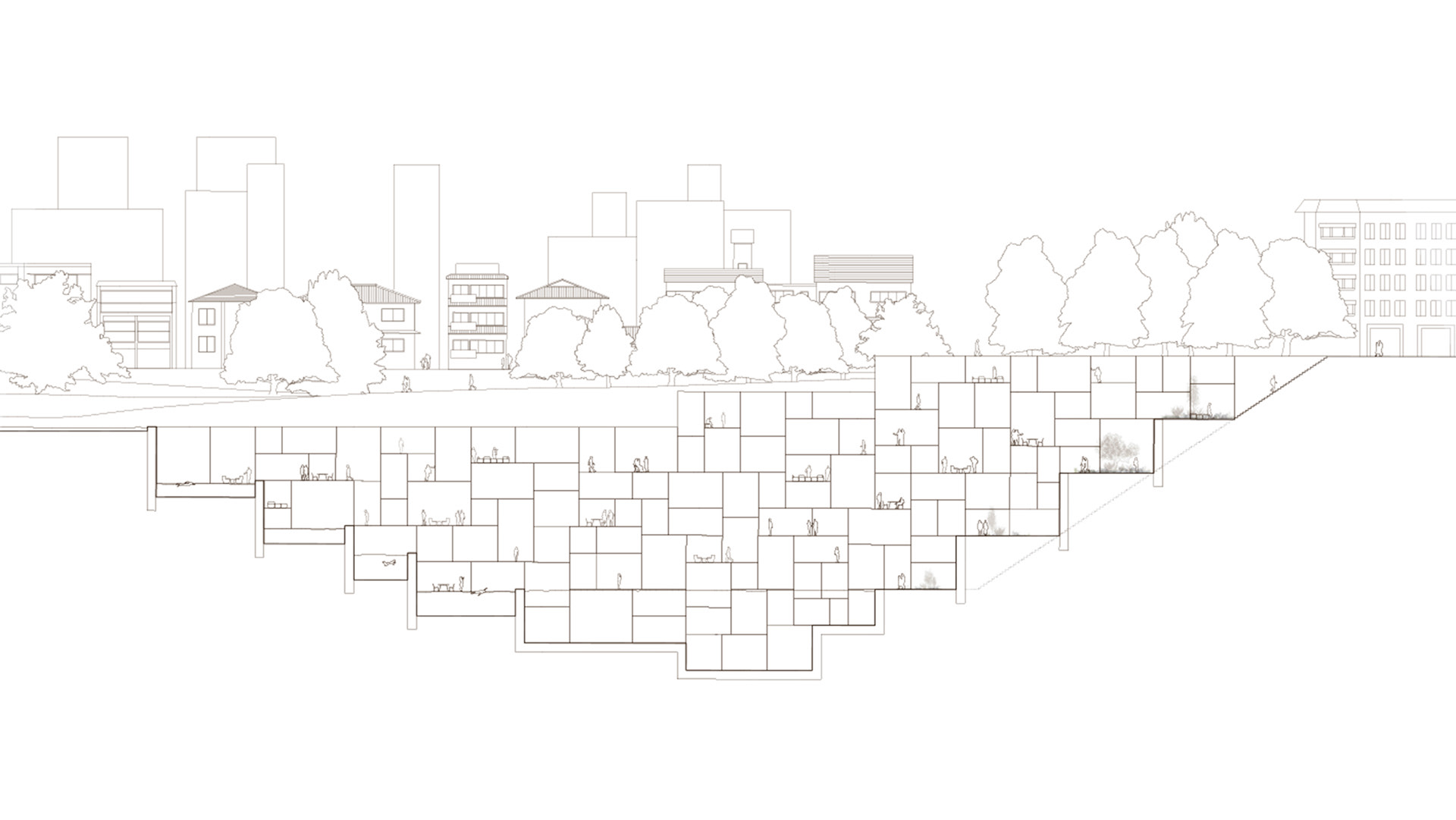
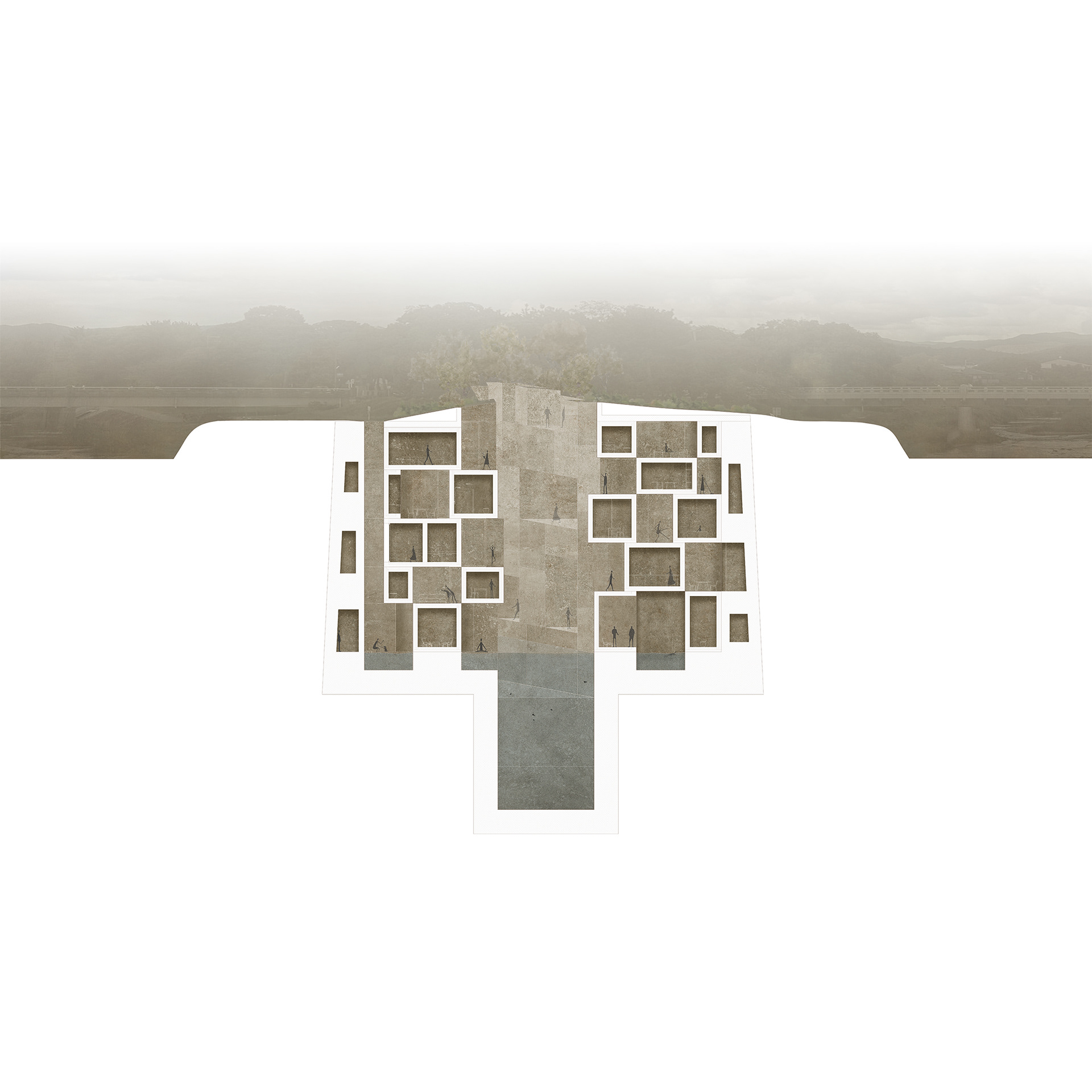

The project is based on the idea of an invisible landmark: rather than introducing a new vertical presence, it defines a place through a linear cut in the ground. This incision follows the direction of the river and the streets leading to the Kamogawa Delta, reinforcing the site’s existing logic of movement and crossing. The cut is not immediately visible from afar; it is discovered through proximity and use, allowing the landscape to remain open and continuous while revealing depth only to those who enter it. Inside the excavation, space is shaped by the arrangement of prefabricated concrete blocks. These elements do not act as façades but as spatial devices, generating a sequence of collective and private areas, circulation paths, and moments of compression and expansion. Light enters through the main cut and smaller openings, creating alternating bright and intimate conditions. River water is brought down to the lowest level of the excavation, where it is filtered and distributed into a system of pools, connecting the interior spaces directly to the natural dynamics of the delta. The construction process is based on a controlled excavation of the landscape. After the soil is removed, a continuous retaining structure is built along the perimeter, integrating circulation, access routes, and services. Prefabricated blocks are then lowered into the excavation and assembled to define the interior spaces. Once construction is complete, the excavation is partially covered again, leaving only the main cut and necessary openings exposed. In this way, the intervention remains largely hidden within the landscape, preserving the visible character of the delta while activating its depth.